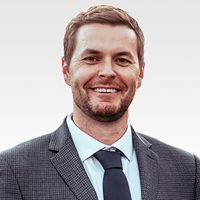
On November 17, SAP announced that Thomas Saueressig, Executive Board member and Chief Customer Officer (CCO), will leave the company at the end of March 2027. He is set to become CEO of IONOS Group SE on April 1. Manos Raptopoulos will take over his responsibilities on an interim basis starting in January, while the Supervisory Board searches for a permanent successor.
His exit is the latest in a long line of leadership changes in SAP’s sales and customer organization, and each one ultimately affects who customers deal with and how deals get done.
SAP customers are facing ECC’s 2027 deadline, new consumption-based pricing, and SAP’s push to play a bigger role in migrations. The question is no longer just what to sign, but who at SAP will be on the other side of the table and what they will prioritize.
Who Is Thomas Saueressig, and Why Is He Leaving SAP After Less Than a Year as CCO?
When SAP created the CCO role in March, we told customers to expect more leadership changes, but we did not expect this one. Christian Klein handed sales oversight to Saueressig and named him CCO, effective April 1. As CCO, he took over the new Customer Value Group, which brought Sales, Customer Success, and Customer Services & Delivery under one leader.
This replaced a co-CRO model led by Jan Gilg and Raptopoulos, who both reported directly to Klein. That model did not work as intended, pulling Walldorf executives into deals throughout 2025.
When SAP announced the change, we called Saueressig a rising star within SAP, and the appointment effectively made him the company’s second-in-command. This move allowed Klein to focus on SAP’s strategic direction, including its lofty AI ambitions, while Saueressig took over revenue and the customer relationship.
That rise was years in the making. A 22-year SAP veteran, Saueressig joined the company in 2004 through its work-study program, served as CIO, joined the Executive Board in 2019, and ran Product & Engineering before moving to the customer side.
Now, just eight months after his appointment, he is already on his way out. By the time he leaves, he will have held the CCO role for exactly one year. That is not much time to deliver on the reorganization SAP framed as essential to closing its execution gaps.
SAP’s announcement offered no reason for his departure, but this does not appear to be a forced exit. He still had plenty of runway at SAP, and he will stay in charge for almost five more months, which is not how SAP typically handles an executive it wants out.
Why Did Saueressig Choose IONOS, and Why Now?
His choice of IONOS is also surprising. IONOS is a German web hosting and cloud provider, majority-owned by United Internet. They serve about 6.6 million customers, most of which are small-businesses. It reported FY2025 revenue €1.3 billion. SAP reported €36.8 billion for the same year, roughly 28 times more. IONOS’s entire annual revenue is about a third of what SAP’s cloud business alone added in 2025.
So why would SAP’s de facto second-in-command leave for a much smaller company? In his own words, Saueressig wants to step out of his comfort zone and into a new role as a European entrepreneur, while also making more room for his personal priorities.
Reading between the lines, this is about cashing in on the career momentum he has built to step out of Klein’s shadow and secure a CEO title. Klein has been in the top job for more than seven years and is still only 46, so that seat was not opening up anytime soon at SAP.
This puts Klein in a tough spot. He is losing his top lieutenant less than a year after handing him the sales organization, and he now has a big decision to make on a replacement. Whoever gets the job, Klein will need time to build trust with the new leader. In the meantime, he is likely to get dragged back into large sales cycles, the very thing the CCO role was created to free him from.
SAP Executive Departures Since 2019: Who Left and What Changed for Customers
Saueressig is the fifth senior SAP sales or customer leader to leave since 2019.
| Executive | Departure | SAP role at exit | Next move |
| Thomas Saueressig | March 2027 (announced Nov 2026) | Chief Customer Officer, Executive Board | CEO, IONOS |
| Scott Russell | August 2024 | Customer Success, Executive Board | CEO, NiCE |
| Adaire Fox-Martin | January 2021 | Customer Success, Executive Board | President, Google Cloud EMEA |
| Jennifer Morgan | April 2020 | Co-CEO | Global Head of Portfolio Operations, Blackstone |
| Robert Enslin | April 2019 | President, Cloud Business Group, Executive Board | President, Google Cloud |
Each new leader has brought a different style and sales focus, from Enslin’s cloud push to Russell’s RISE push to Saueressig’s AI and outcome-based selling, and customers have had to adjust each time.
North America has seen the same churn. DJ Paoni, President of SAP North America, left in August 2022, and Lloyd Adams followed in March 2025, leaving the role vacant for roughly ten months until SAP promoted David Robinson in January 2026. The gap raised questions about SAP’s regional approach and leadership stability.
Saueressig is not the only board member heading for the exit. Muhammad Alam, who leads Product & Engineering, has said he will not renew his contract when it expires in March 2027, citing personal reasons. That means SAP will lose the board-level leaders of both its customer organization and its product organization in early 2027, with no permanent successor named for either.
Who Will Replace Thomas Saueressig as SAP’s Chief Customer Officer?
Don’t read too much into Raptopoulos’ interim label. He has been CRO for EMEA, MEE, and APAC since joining SAP’s Extended Board in February 2025, and he already oversees parts of Customer Success. The job is his to lose. The temporary label mostly gives SAP cover to consider outside candidates while he shows he can run the full customer organization. It is also possible there is already an outside candidate in mind, but SAP has generally preferred to promote from within. In fact, none of the sales leaders in the table above came from outside SAP, and on average they spent more than 18 years there before moving on.
We do not expect his co-CRO counterpart, Jan Gilg, to be a candidate. Gilg’s focus has been on product, and we have seen him keep his distance and delegate sales-specific discussions to his team. That leaves Raptopoulos as the clear frontrunner.
What Does Saueressig’s Exit Mean for SAP Negotiations in 2027?
SAP customers should monitor the ripple effects of these leadership changes and evolve their negotiation approach as they unfold. Leadership turnover creates risk, as commitments and relationships can disappear with the people who made them. It also creates opportunity, as new leaders look for early wins. Customers who prepare for both will be in the best position. Specifically, customers should:
- Track what happens to Saueressig’s agenda. His organization was pushing outcome-based AI pricing and a bigger SAP role in ECC-to-RISE migrations. Watch for shifts in SAP’s strategy in these areas following his departure.
- Monitor the Customer Value Group’s future. SAP only recently combined sales and services, and Saueressig was the executive appointed to bring those organizations together. Will SAP stay on this path, or split them apart again? If it splits them, expect a shift in SAP’s approach and how they engage customers.
- Plan for a bumpy handoff. Between January and March 2027, an outgoing leader and an interim one will share the customer organization. Expect slower approvals at first, followed by pressure to close as Raptopoulos works to prove himself. Whoever ends up in the role permanently will need to show results quickly, and that pressure can work in your favor on RISE and AI deals. Remember that verbal promises and roadmap assurances leave with the people who made them, so make sure credits, migration support, and other key terms are carried forward and written into your contract.
- Expect further changes downstream. Leadership moves at the top rarely stop there. If Raptopoulos lands the permanent role, his regional responsibilities will need new owners. Augusta Spinelli is one to watch. She took over his former role as Regional President for EMEA in August 2025, has since absorbed more of his old responsibilities, and is likely to keep rising if he moves up. Each move below the top can mean new account teams, new approval paths, and new relationships to build.
- Lock in executive coverage now. The right SAP executive sponsor can be the difference between a deal that moves and one that stalls. If Saueressig is yours, request Klein as his replacement. With no permanent leader named for SAP’s customer organization, Klein is the most stable option, and the one with the most authority to advocate on your behalf.
UpperEdge tracks these changes closely so our clients are not caught off guard. If you are in the middle of an SAP negotiation or planning one for 2027, contact us to understand how these changes may affect your deal.
About the Author