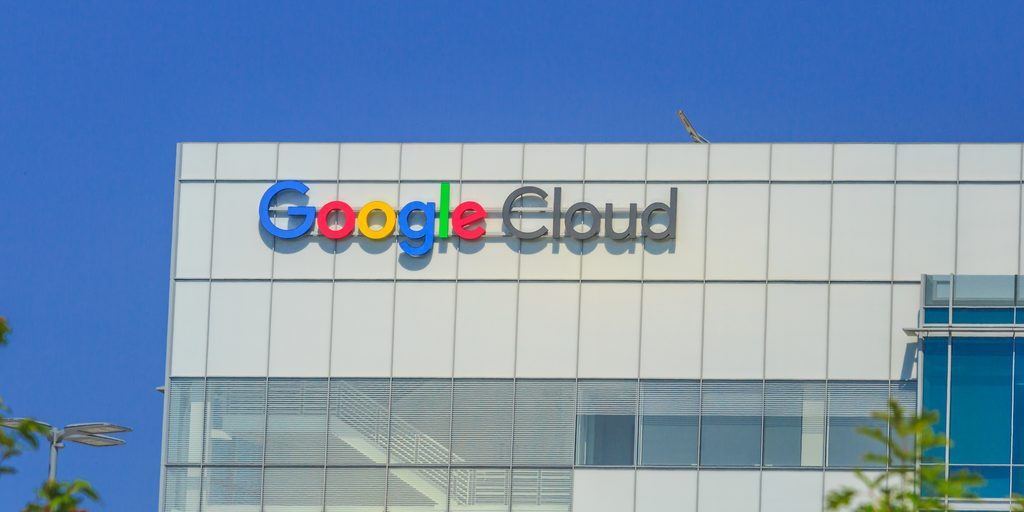
Google Cloud NEXT 2026 felt different from prior years. This was not just a product showcase or a series of feature updates. It was a clear attempt to reposition how enterprises think about cloud altogether.
Google is moving away from selling infrastructure as the core value proposition and instead focusing on running business processes on top of its platform. That shift has real implications for how enterprises will be asked to spend, commit, and operate in the cloud over the next several years.
Key Announcements from Google NEXT
New Gemini models, Vertex AI updates, and TPUs deepen full-stack integration and dependency.
Google expanded its integrated offering across Gemini models, Vertex AI, and next-generation TPUs. The message is consistent: better performance and efficiency come from staying within the Google ecosystem. While that can simplify deployment, it also increases dependency. The more tightly aligned an enterprise becomes to this stack, the harder it will be to introduce competition or shift workloads later.
Wiz partnership signals deeper push into unified cloud security and platform control.
Google’s partnership with Wiz reflects a stronger move into integrated cloud security, embedding posture management, risk visibility, and remediation more directly into its platform. While this improves visibility across environments, it also further centralizes security operations within Google’s ecosystem. For enterprises, this increases convenience but also raises questions around dependency, tool consolidation, and long-term flexibility in security strategy.
Expanded cross-cloud capabilities reinforce multi-cloud access but not portability.
Google reinforced its multi-cloud positioning with expanded capabilities to access and analyze data across AWS and Azure. These features are meaningful, but they largely sit at the data layer. Core orchestration and workflow execution remain centered in Google Cloud, meaning deeper adoption will still pull enterprises toward the platform over time.
Gemini Agent Platform launches, positioning Google as the workflow control layer.
The headline announcement was the launch of Google’s Gemini Enterprise Agent Platform, designed to orchestrate workflows across applications, data, and services. Google is positioning itself as the coordination layer for how work gets done. From a sourcing standpoint, this shifts cloud consumption away from infrastructure and toward business activity, making it easier to justify larger commitments while making cost attribution less clear.
What This Means for Enterprise Cloud Commitments
AI Is driving commitments ahead of reality.
Google is shifting the basis of cloud deals from what enterprises use today to what they plan to build. That means commitments will increasingly be tied to transformation narratives, particularly around AI and automation, rather than existing workloads:
- Expect larger, longer-term agreements tied to roadmap adoption
- Value will be framed around business outcomes, not infrastructure consumption
- Enterprises will be pushed to commit ahead of proven usage patterns
Consumption volatility will make cloud costs harder to control.
As systems become more automated and continuously running, usage patterns will be less predictable. At the same time, pricing is becoming more layered, making it harder to track and manage total spend.
- Usage will fluctuate based on activity, not just deployed resources
- Costs will span infrastructure, models, and workflow execution
- Forecasting and benchmarking will become more complex
Architectural lock-in will reduce flexibility over time.
The biggest risk is no longer just contractual. As enterprises adopt more integrated platform capabilities, dependencies will form at the workflow, tooling, and security layers. This makes it harder to switch providers or introduce competition later.
- Dependencies will build into core business processes
- Platform consolidation (including security tooling) will narrow options
- Negotiating leverage may weaken without deliberate multi-vendor strategies or consideration of alternatives
The Bottom Line
Google Cloud is moving from a model based on infrastructure consumption to one based on business activity and execution. That creates real opportunity, but it also introduces more complexity into how costs are structured, how commitments are sized, and how dependencies are formed.
This presents risk for enterprises that do not fully understand the long-term commercial impact.
The path forward requires more discipline:
- Push for clarity in how new pricing models actually work in practice
- Avoid overcommitting based on future assumptions that are not yet proven
- Maintain architectural flexibility, even when platforms push toward consolidation
Google is making a strong case to become the center of enterprise operations. Organizations that stay flexible and well informed will be best positioned to navigate what comes next.
Most organizations are not prepared for how quickly these changes will impact their cloud spend and flexibility. Now is the time to assess where you may be overcommitting, underestimating cost volatility, or exposing yourself to long-term lock-in. Explore our Cloud Advisory Services to see how we can help.